At a recent Glenferrie meeting our guest speaker was Faye Kirkwood, a member of Caulfield Rotary, who spoke on the importance of bees in the world and a group known as Rotarians for Bees, part of ESRAG project (yes, another Rotary acronym and stands for the Environmental Sustainability Rotary Action Group). Rotarians for Bees was started by Canterbury Rotarian John McCaskill and Faye around 5 years ago and has become a multi-club group with members in NSW and ACT. Its mission statement is to provide protection and sustainability for the current and future health of bees and other pollinators in the State of Victoria (and further), through ESRAG and the collaborative resources and efforts of Rotary Districts, beekeeping Clubs, the Apiary Industry and local, state and federal governments.
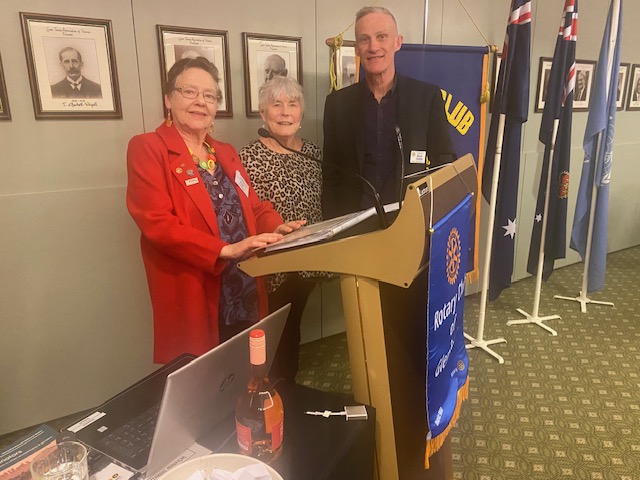 Fay Kirkwood, Cheryl Pisterman & President Mark Howlett |
 Faye was full of interesting and very important information. Did you know that for Food Security we need BEE SECURITY. Pollinators affect 35% of global agricultural land, supporting the production of 87 of the leading food crops worldwide. The vast majority of pollinators are wild, including over 20,000 species of bees. Together with the European honeybee, Apis Mellifera, they are the keystone of our forests, fodder, flowers, fiber and food crops. Beekeepers need to be registered with the Dept of Agriculture – so they can be contacted if there is a problem, such as spraying or bee diseases, in their area. The department can check the health of the hives and registration can be done online. Registration is free for hobby beekeepers, but larger Apiary’s have a fee to pay. You are restricted by size of your land to how many hives you are allowed on the property. Caulfield Rotary is one such hobby member.
Currently there are about 9000 registered beekeepers in Victoria: 8500 recreational and 500 commercials. There are about 24 beekeeping clubs and associations with 2500 members. Therefore, there are at least 5000 beekeepers that are not involved in Clubs and their knowledge is questionable especially in relation to biosecurity and disease control.
Then Faye covered the incidence of Varroa Mite - Australia being the last continent to get it. Since 2022 it has been in NSW and has been found in some border areas. It was fascinating to learn of the three methods currently used for testing for Varroa in a hive: Sugar Shake, Alcohol wash and drone uncapping. Sugar shake testing is fun as you put about 100 bees into a shaker with icing sugar, shake it gently to coat the bees, then shake the sugar and its contents (not bees) into a container of water – the sugar dissolves and you can see if anything was on the bees. Then you tip the bees gently out near the opening of the hive and watch these white bees try to get back into the hive. The sugar makes it too heavy for them to fly. The bees in the hive then come out and have a lovely feast from the white bees and clean them up, then they can get back into the hive and the adult bees have had a feast. (Author's note: the pictures are too awful to share).
How can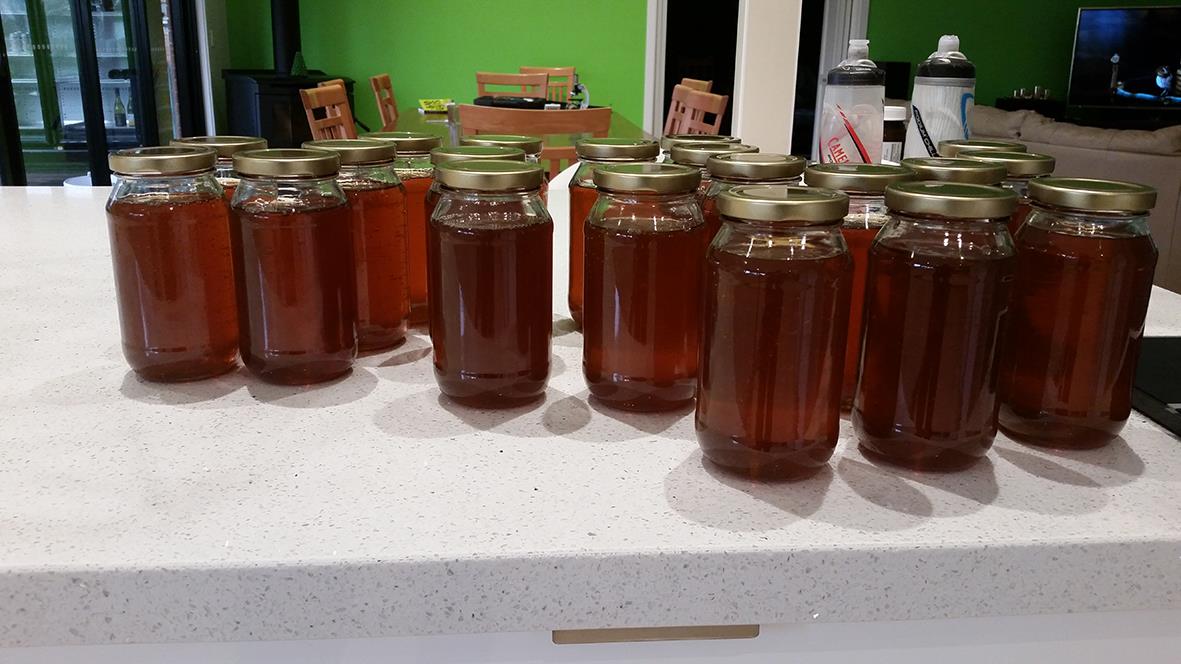 we all help the Bee Community? Ensure training of beekeepers and make sure that pollination is able to take place. Exchange with other countries to learn from them and exchange ideas. Environmental focus can also involve both younger and older members of the community.
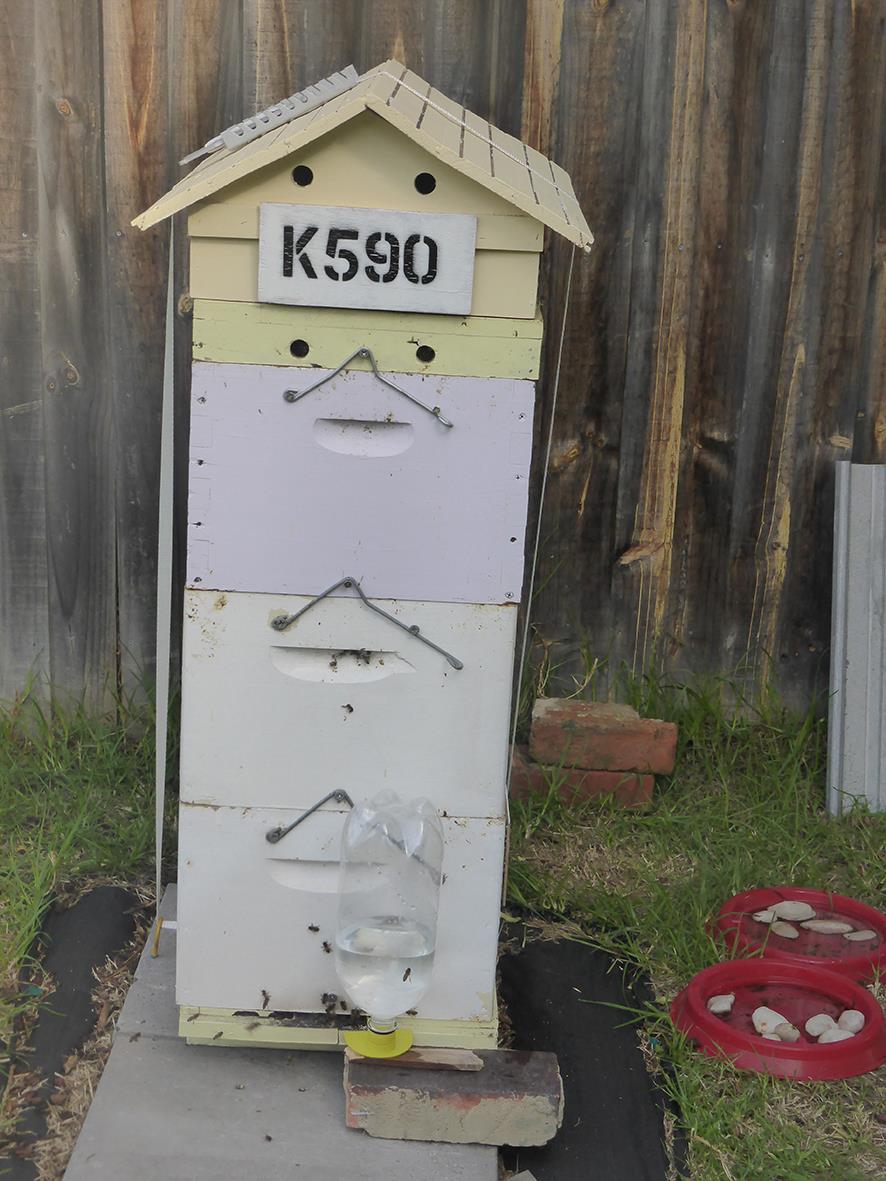
we all help the Bee Community? Ensure training of beekeepers and make sure that pollination is able to take place. Exchange with other countries to learn from them and exchange ideas. Environmental focus can also involve both younger and older members of the community.What can everybody do? 1. Encourage people to plant bee friendly plants. 2. Have a water source for the bees with steppingstones (so they don’t drown). 3. Don’t be scared near bees, they only sting to protect themselves, and then they die. 4. Contact your Council or an apiarist to relocate a swarm. Don’t kill them. 5. Encourage people NOT to use pesticides out of doors. 6. Buy locally produced honey from registered beekeepers.
How has Rotary been involved? Wheen Bee Foundation has produced Powerful Pollinator guides for areas around Australia (up to 30 at present with more on the way) there are 3 for the Melbourne area which were paid for by Rotary as an environment project. To learn more about bees, visit their website: https://www.wheenbeefoundation.org.au/.
There are many different types of hives and Faye introduced us to the newest type, known as Flow Hives, which make it very easy to harvest the honey. You still need to check the hive regularly as is done with all other hives. These Flow Hives were developed in NSW by a father and son team and are now being sold all over the world. Another example of the Aussie ingenuity.
 Faye provided some very interesting statistics (reflected in the types of questions at the end of the presentation). As example of the importance to our food security, the following are some of products which depend on pollination:
 Pollination responsiveness of selected crops as a percentage of yield
Tree Crops Bee dependence
Almond, apple, avocado, blueberry, 100%
Cherry, macadamia, mango, 90%
Grapefruit, citrus (0 -80%) 80%
Apricot, plum, prune 70%
Nectarine, peach 60%
Pear 50 – 100%
Mandarin, orange 30%
Lemon, lime, papaya 20%
Thank you, Faye, for reinforcing the importance of bees and other pollinators in our community. Note for those interested, certain stores in Boroondara have truly local honey sourced from Glenferrie Oval in the range known as Backyard Honey.